Trinidadian Beach Scene
Skills
Level Design
Game Programming
Location
Atlanta,Ga
Year
2024
Info
"Pushing Unreal Engine to the breaking point to recreate a piece of home. An exploration of hyperrealism, dynamic fluid systems, and the technical art of environmental motion."
Description
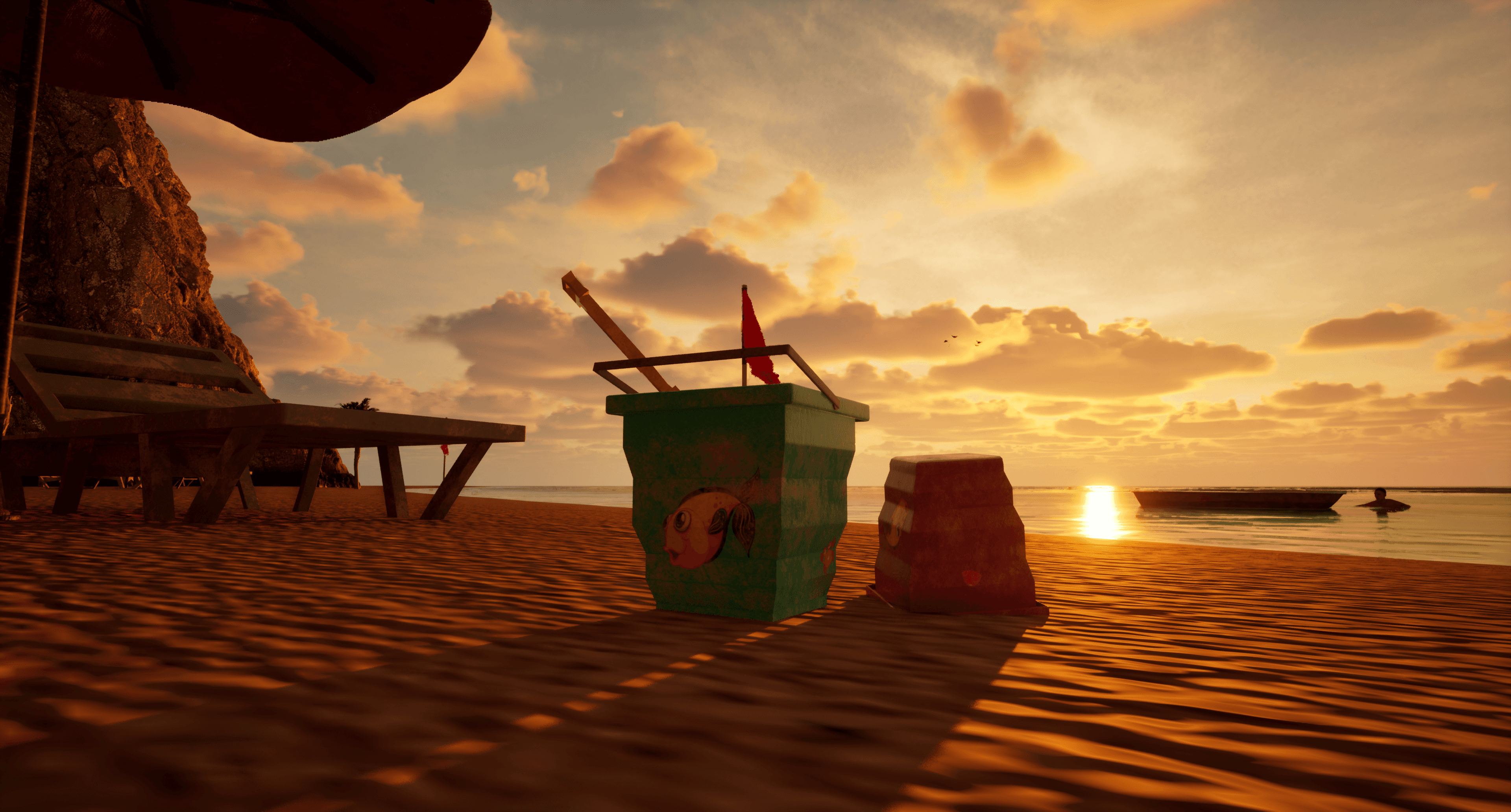
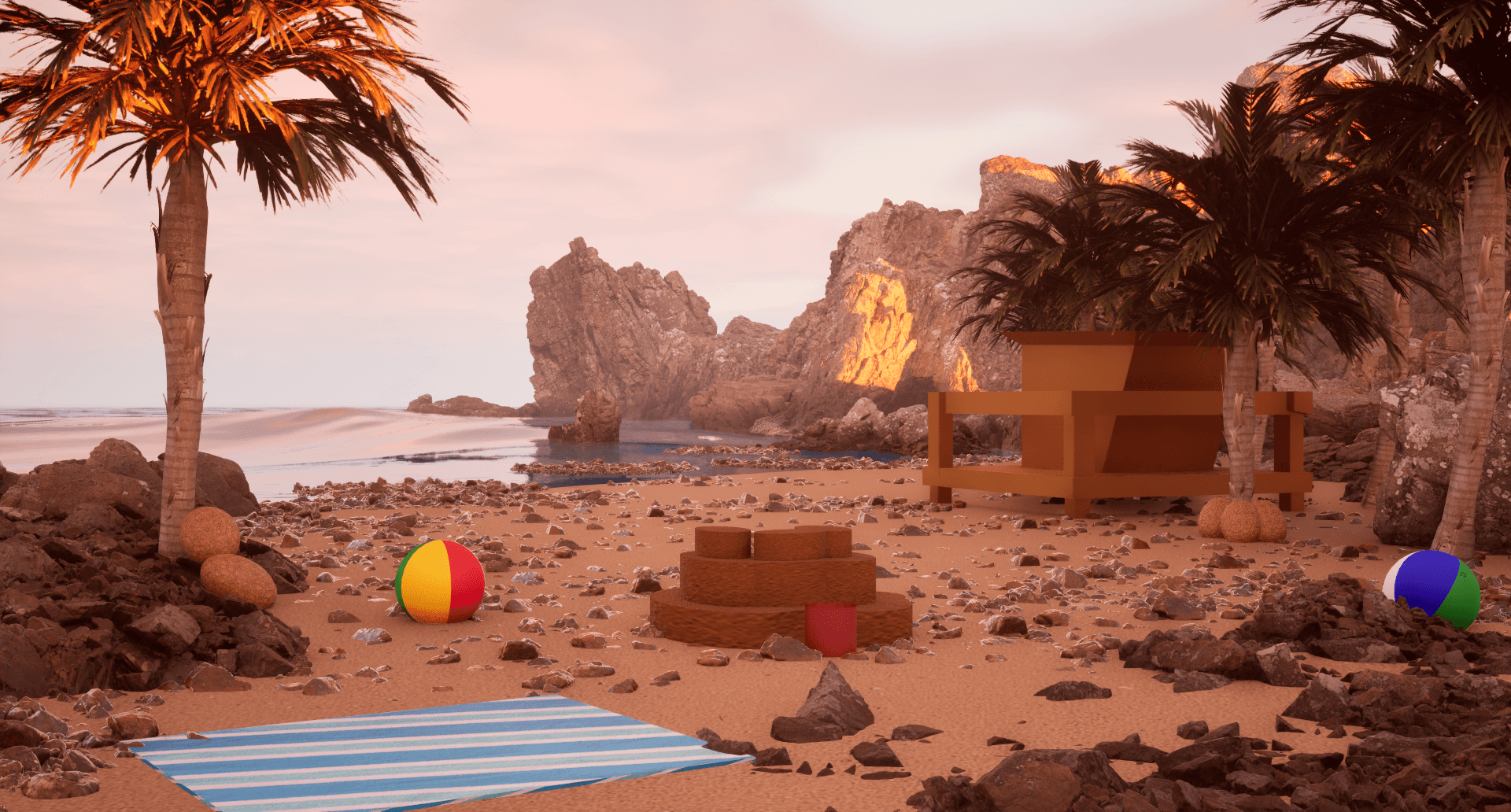
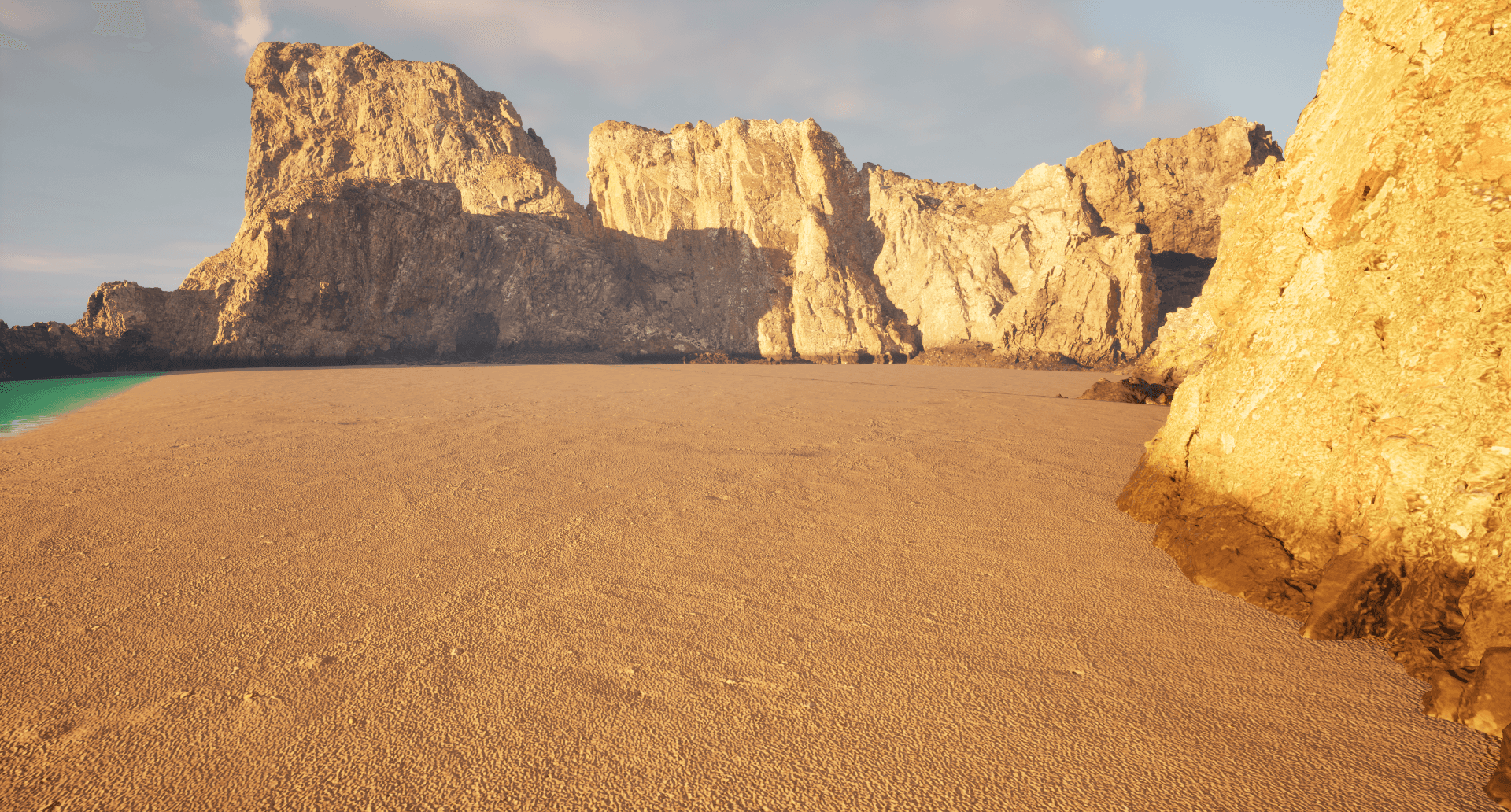
A high-fidelity recreation of the coastlines of Trinidad and Tobago, this project served as a rigorous study in balancing extreme visual fidelity with real-time engine constraints. By blending custom Maya modeling with industry-standard plugins, I developed an atmospheric, motion-heavy environment that captures the soul of my home country.
Technical Pipeline & Integration
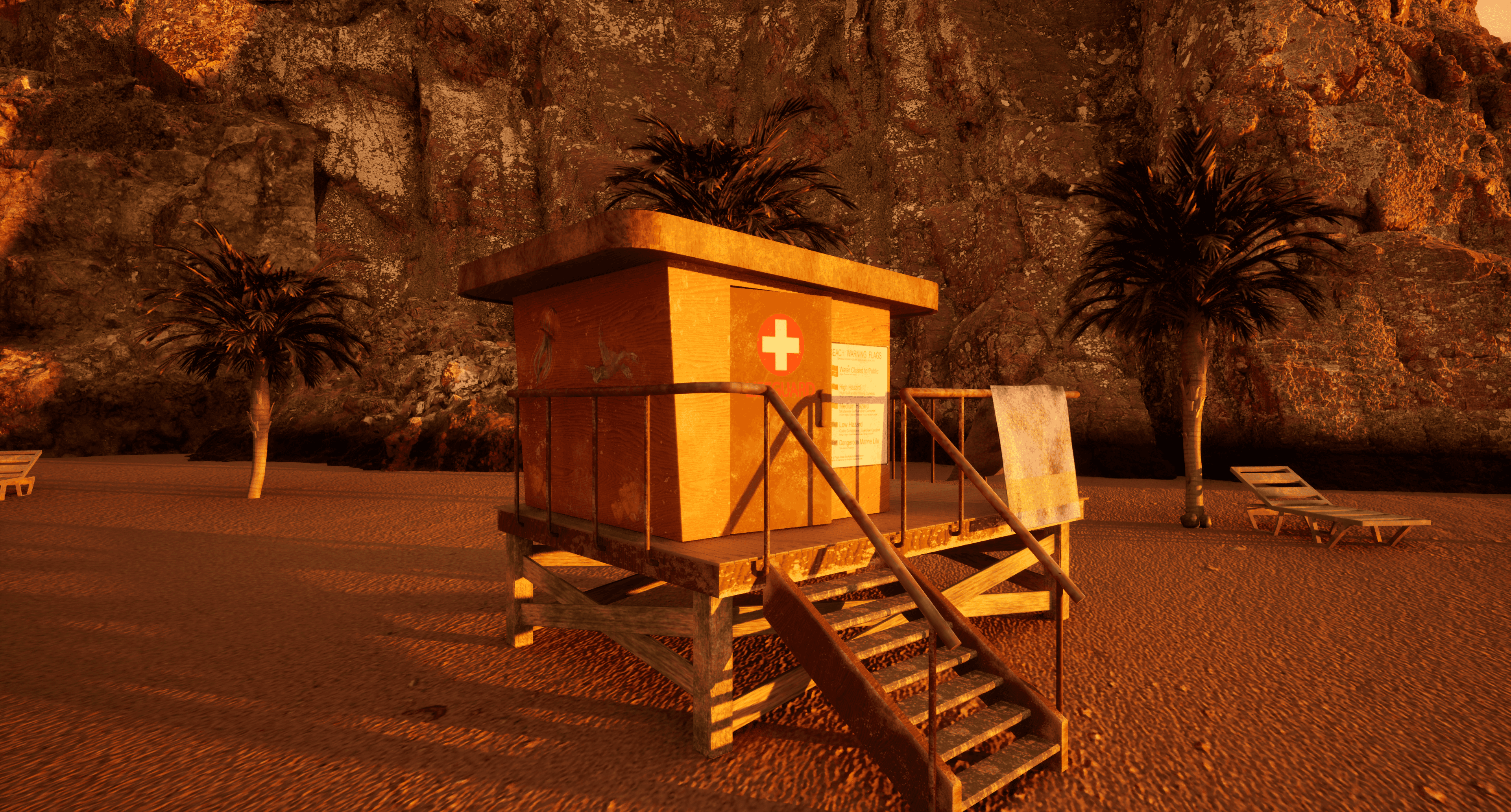
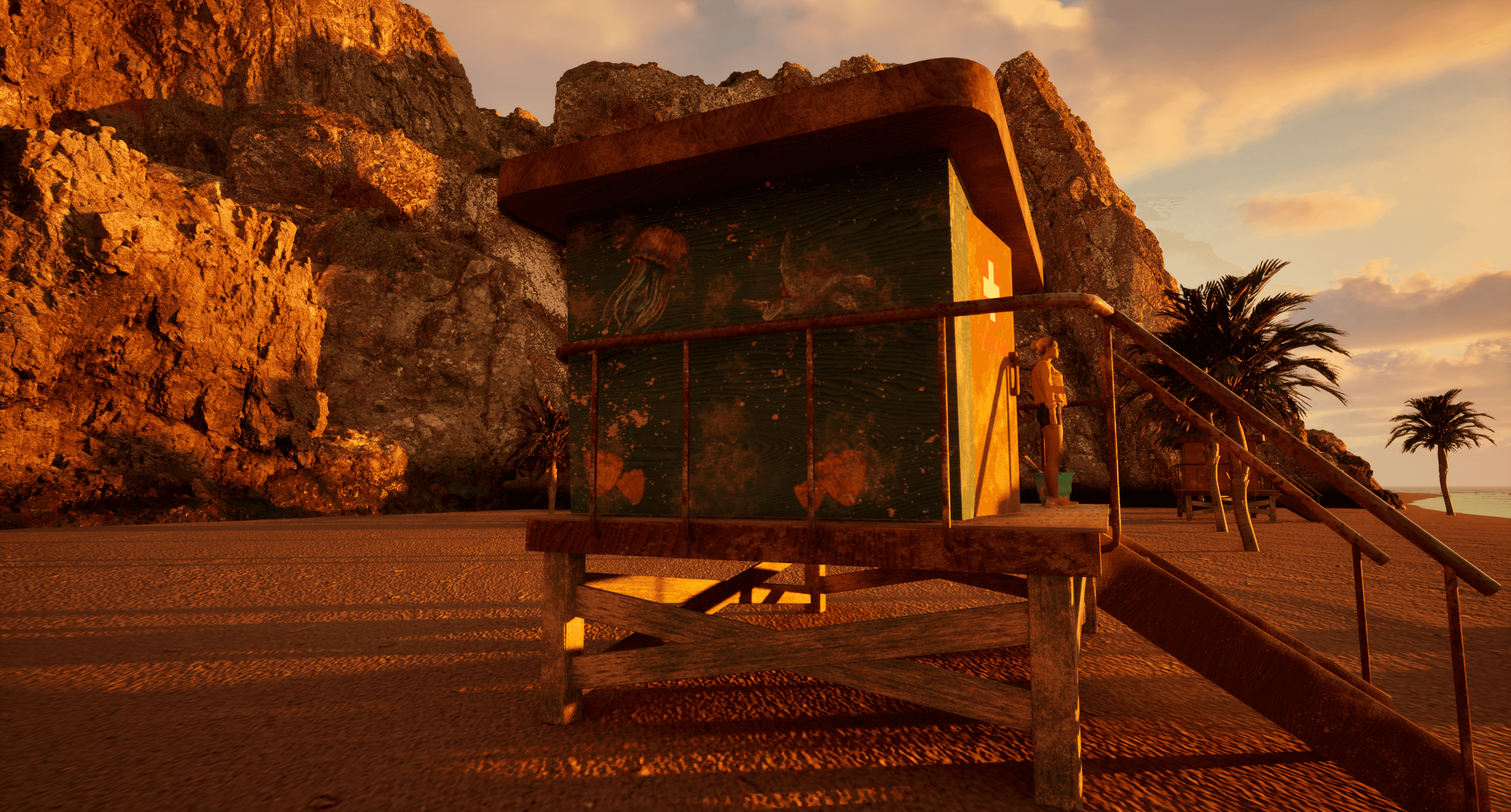
Bespoke Modeling & Integration (Maya): Modeled the majority of the scene’s props and structures in Maya, focusing on architectural accuracy and seamless integration with Quixel Megascans and high-quality external assets.
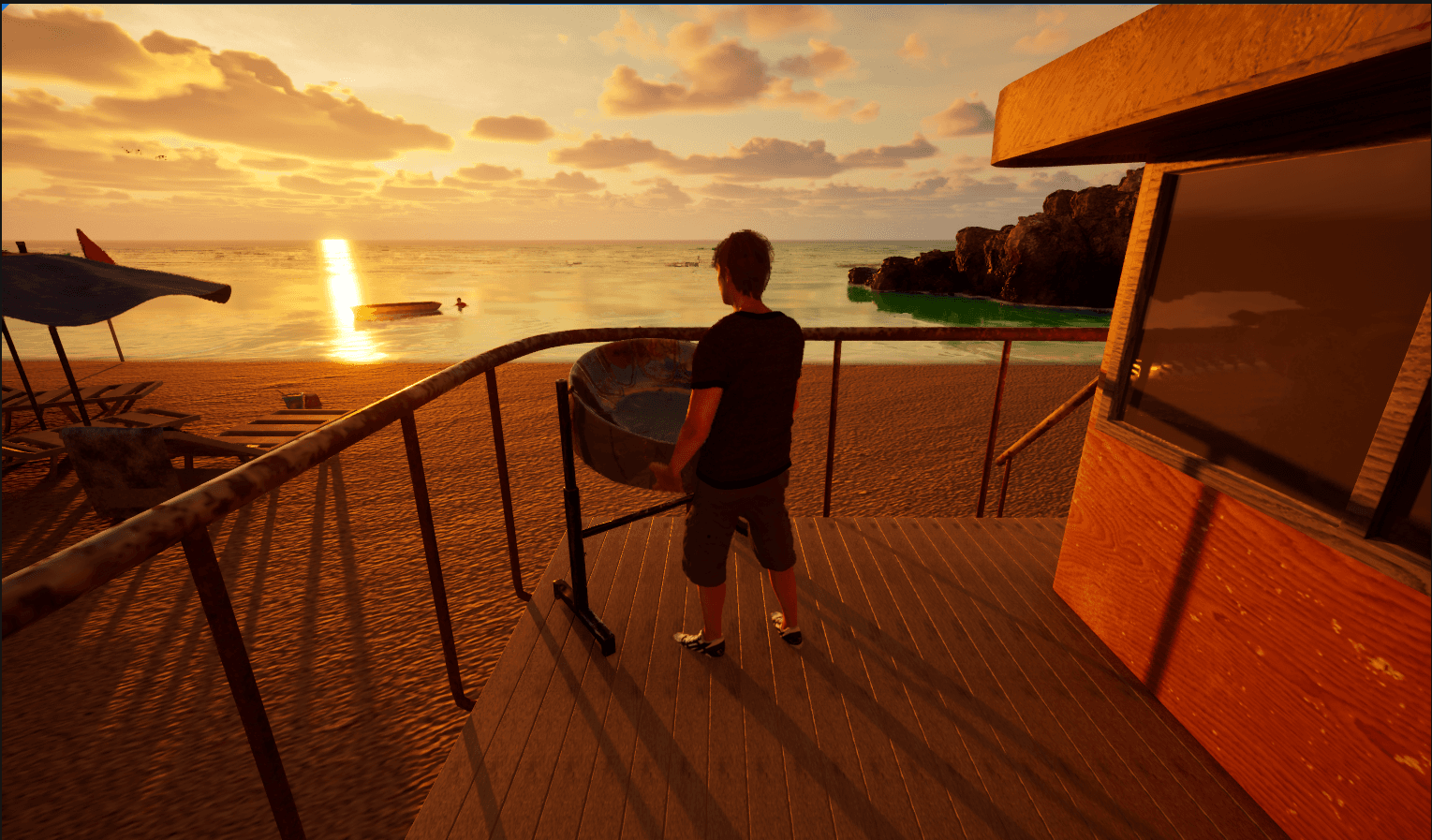
Dynamic Fluid Systems: Leveraged the Unreal Water Plugin to architect a reactive ocean. I engineered the interaction between the wave systems and a floating boat, ensuring realistic buoyancy and shoreline displacement.
Environmental Vertex Animation: Utilized World Position Offset (WPO) to breathe life into the scene. I authored custom wind logic for trees and fabric assets (towels/canopies) to create a subtle, immersive "tropical breeze" effect without the overhead of full skeletal simulations.
Atmospheric & Character Logic: Integrated the Ultra Dynamic Sky system for realistic lighting and utilized Mixamo for character placement, grounding the scale of the environment and enhancing the storytelling.
The "Stress Test" Resolution
This project was a significant exercise in Performance Optimization and Stability. Pushing the limits of high-resolution geometry and fluid sims resulted in intense hardware stress; however, through iterative debugging and profile-balancing, I stabilized the scene into a polished, portfolio-quality real-time render.
Asset Attribution (Transparency)
Custom Models: Structures, hero props, and set dressing (Maya).
Environment Scans: Sand and Mountains (Quixel Megascans).
Supporting Assets: Palm Trees & Birds (Sketchfab); Characters (Mixamo).
Sky/Weather: Ultra Dynamic Sky Plugin.
Design Insight: Balancing Fidelity and Real-Time Stability
Recreating a piece of my home country, Trinidad and Tobago, was more than an art project—it was a rigorous stress test of Unreal Engine 5’s rendering and simulation capabilities. My goal was to move beyond a static "postcard" and create a living, reactive world that captured the specific atmosphere of a Caribbean coastline.
Technical Complexity & Environmental Motion I focused on achieving a "cinematic" feel through secondary motion. By leveraging the Water Plugin for dynamic wave systems and buoyancy physics, I created an interactive shoreline. I then layered in World Position Offset (WPO) to simulate wind-driven movement in palm trees and fabric. These vertex-level animations were essential for "selling" the realism without the heavy performance cost of full skeletal simulations.
Stability through Iteration Achieving this level of high-fidelity lighting and material depth pushed my hardware and the engine to their limits. After navigating over 50 engine crashes, I was forced to master the art of Performance Budgeting. I learned to profile my scene, optimize high-poly Nanite clusters, and balance the overhead of real-time fluid simulations against the visual payoff.
The Takeaway This project taught me that "realism" is as much about stability as it is about aesthetics. Whether for interactive gameplay or virtual production, a beautiful scene is only successful if it is reliable. I walked away with a deep understanding of how to bridge the gap between "pushing the envelope" and maintaining a production-ready environment.