Cave of Papa Bois
Skills
Level Design
tech stack
Solo Dev, UE 5.3
Year
2023
Info
"Bringing Caribbean legend to life. A folklore-inspired environment study focused on creating a thematic, natural sanctuary for Papa Bois through high-fidelity modeling and atmospheric lighting."
Description
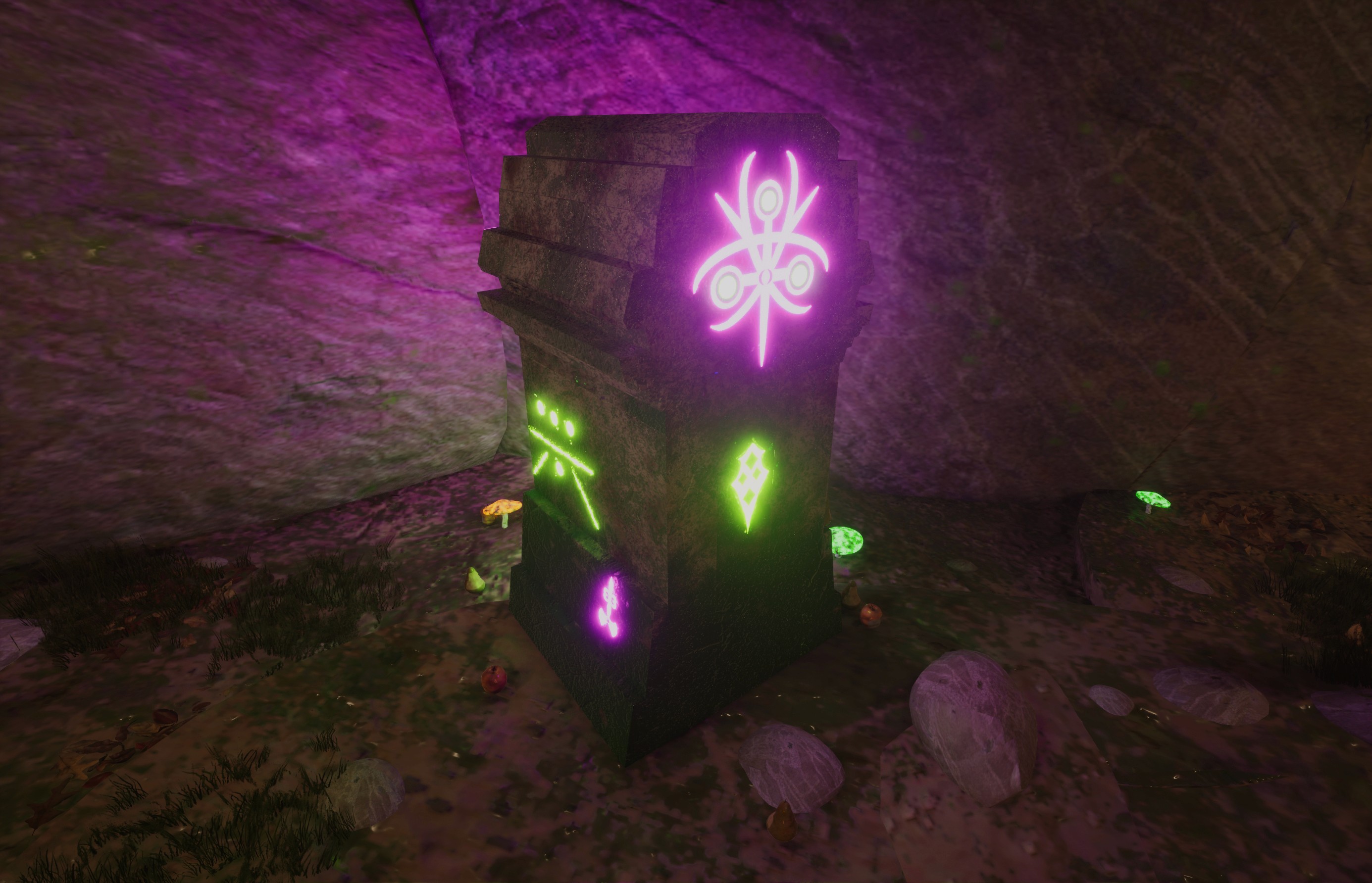
Inspired by folklore, this project was an exploration of atmospheric storytelling through environment design. I managed the full production pipeline from initial grey-boxing to final cinematic rendering, to create a cave environment that balances eerie mystery with material richness.
The Creative Pipeline
Architectural Foundation: Developed the scene’s flow through initial concept sketches and greyboxing, establishing scale and composition before moving into high-fidelity modeling.
Precision Modeling (Maya): Modeled all environmental assets with a focus on clean topology and efficient UV layouts, ensuring assets were optimized for high-quality displacement without sacrificing performance.
Material Artistry (Substance Painter): Elevated surface detail using displacement and emissive maps to create depth and an otherworldly glow. I focused on layering textures to suggest age, moisture, and "folklore" history within the stone and props.
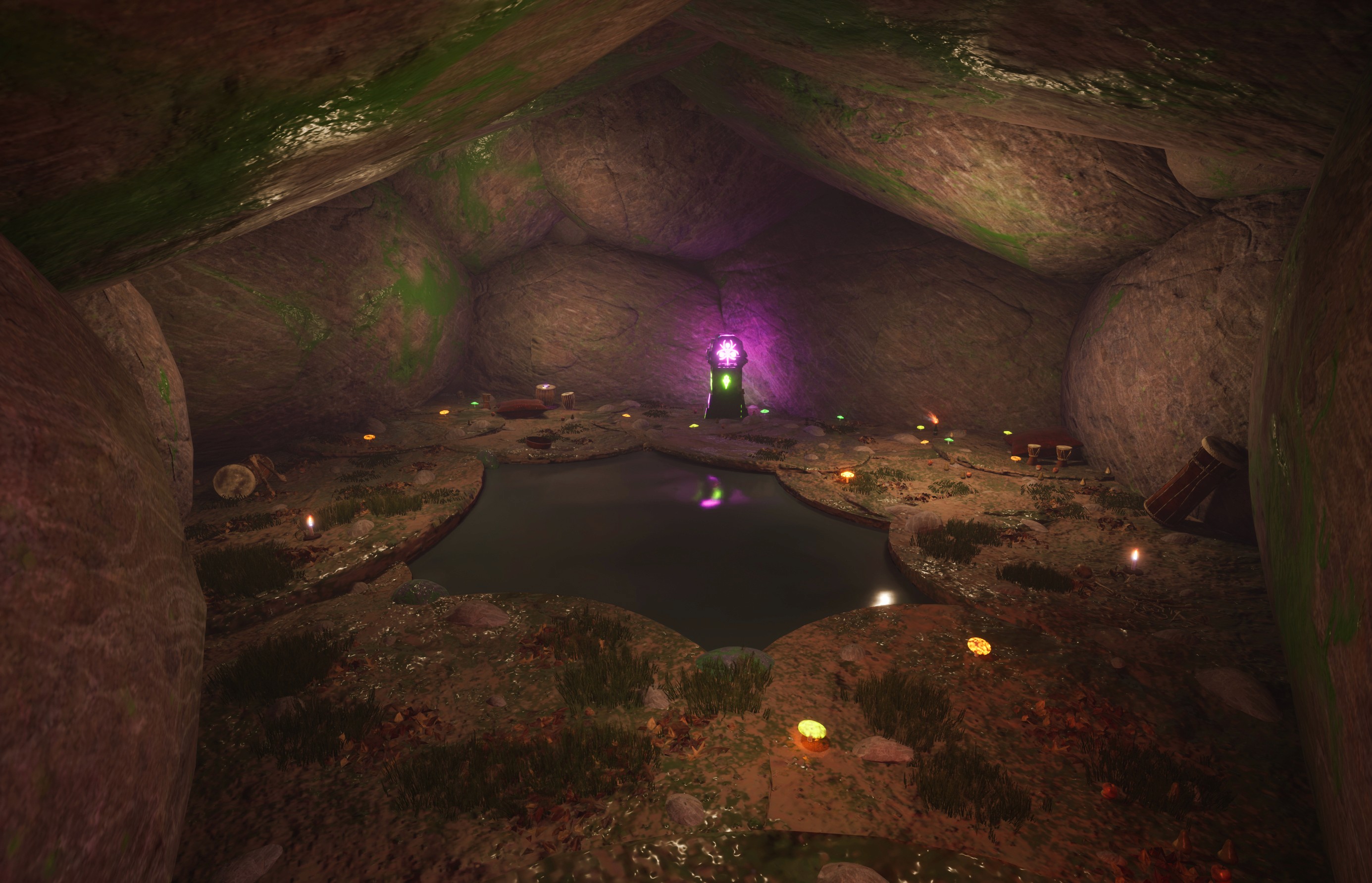
World Building & Lighting (Unreal Engine): Hand-placed assets to guide the player's eye through the cave. I utilized a layered lighting pass to contrast deep shadows with vibrant emissives, crafting a moody, immersive atmosphere.
Cinematic Presentation: Authored a series of cinematic camera tracks to showcase the environment’s narrative potential, focusing on focal length and composition to highlight portfolio-grade details.
Core Competencies
Full-Pipeline Development: Concept -> Maya -> Substance -> Unreal Engine.
Technical Art: Specialized in displacement/emissive workflows and UV optimization.
Atmospheric Storytelling: Expert use of lighting and set-dressing to convey a specific theme.


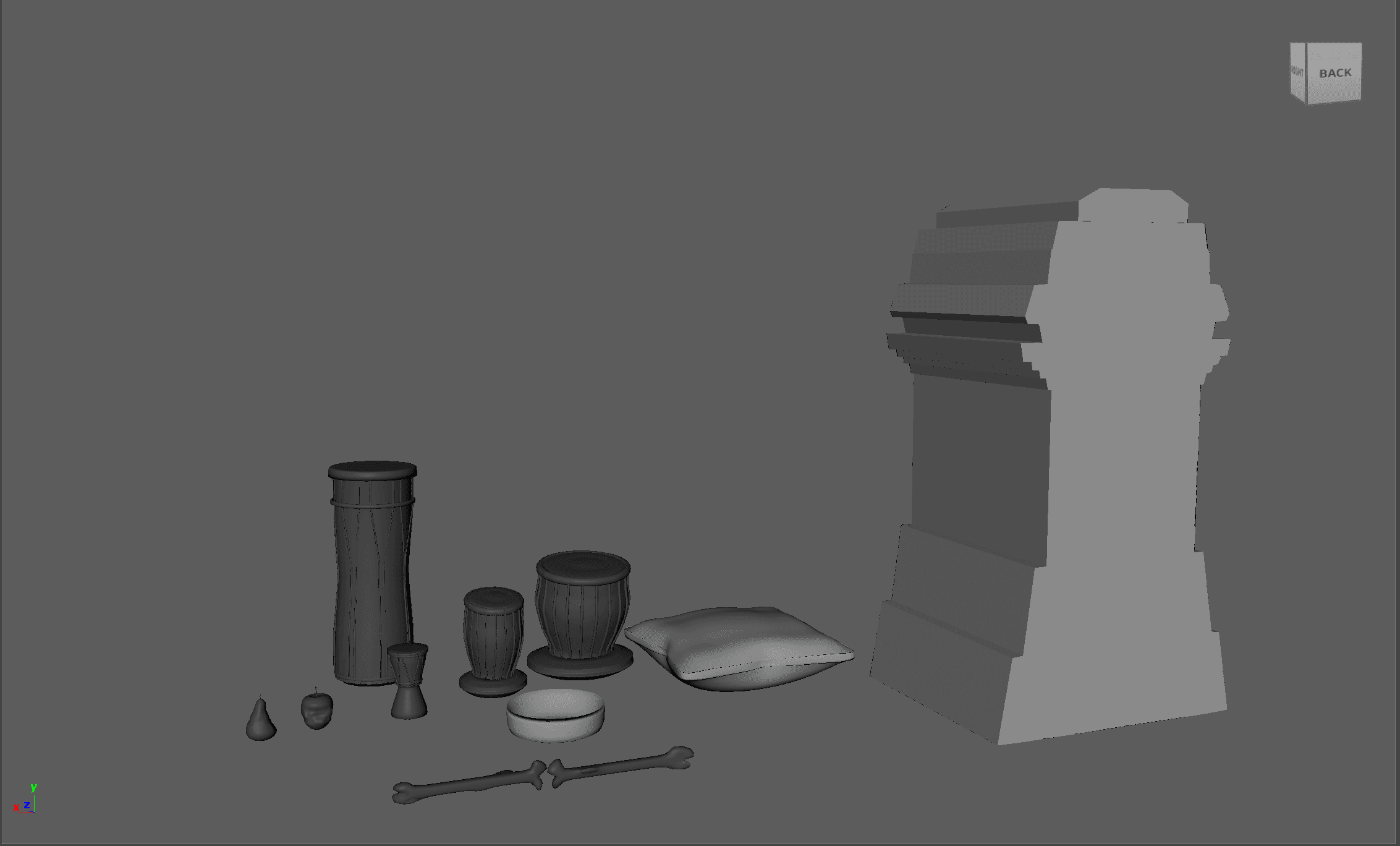
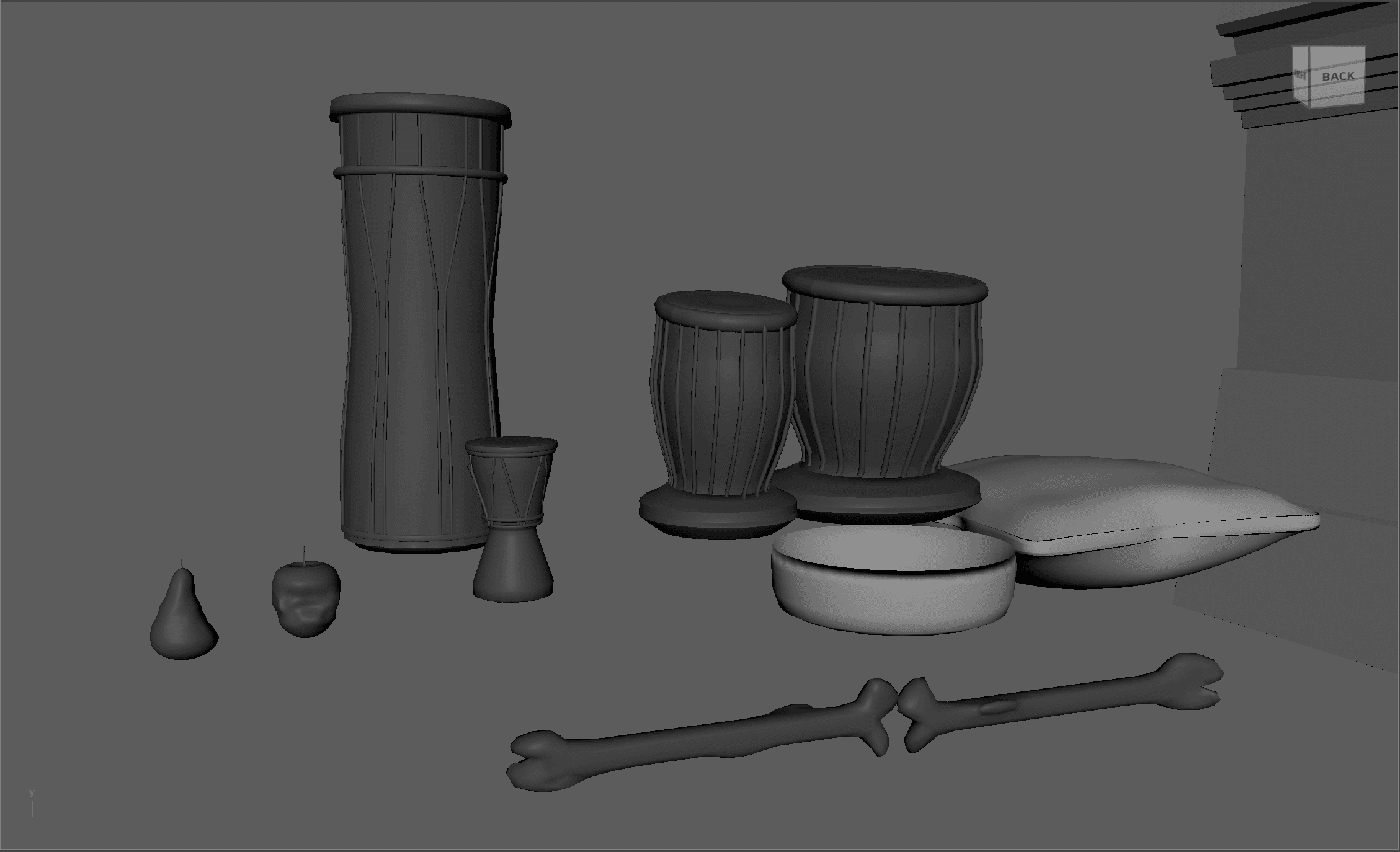
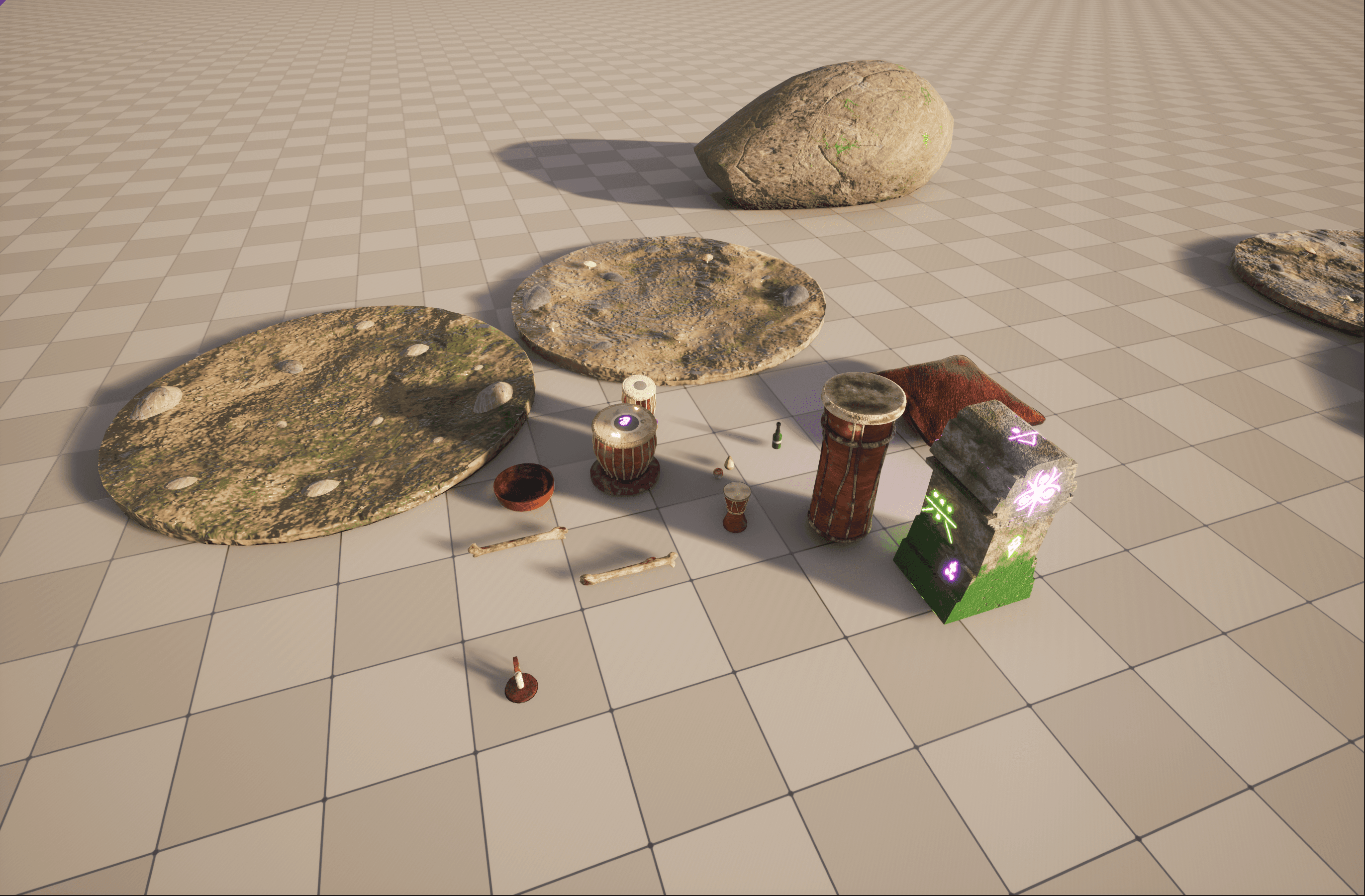
Design Insight: The Synergy of Asset Pipelines
Building this folklore-inspired environment was a masterclass in how modeling, texturing, and engine implementation must function as a single, cohesive dialogue.
Bridging Topology and Texture In Maya, I focused on mastering clean topology and optimized UV layouts. I realized that "good geometry" isn't just about a low poly count, it’s about creating a foundation that allows for high-fidelity texturing and predictable light bakes. By prioritizing flow, I ensured that displacement maps in Substance Painter could wrap seamlessly, preventing stretching and preserving the material's tactile richness.
Texturing as Narrative I moved beyond surface-level realism to focus on visual storytelling. By layering displacement and emissive maps, I was able to guide the player's eye toward key narrative elements. Whether it was the subtle erosion on an ancient altar or the glow of a handprint, I learned that roughness variation and emissive placement are powerful tools for defining mood and hierarchy within a dark, complex space.
The Holistic Approach This project fundamentally changed my workflow. I no longer view environment creation as a linear checklist of tasks, but as a symbiotic process. Technical precision in the early stages directly empowers the artistic intent of the final render. This mindset allows me to build spaces that are not only performance-optimized for Unreal Engine but are also rich with atmospheric depth and storytelling.