Project Rod3nt

Skills
Game Programming
Technical Artist
Level Design
UI Designer
tech stack
12 Developers, UE 5.6
Year
2025-2026
Info
Project Rod3nt | Capstone Lead- As the Development and Programming Lead, I steered the technical vision and UI design while managing version control and data-driven QA to refine gameplay from playtesting to final polish.
Description
Project Rod3nt is a action adventure game with similarities to Untitled Goose Game and Hitman but with a cute twist. You play as cybernetic rodents sent back in time to commit an assassination that will change history forever.
Technical Architecture & Leadership
As the Development and Programming Lead, I architected the game’s core systems and steered the team through a high-velocity, iterative production cycle.
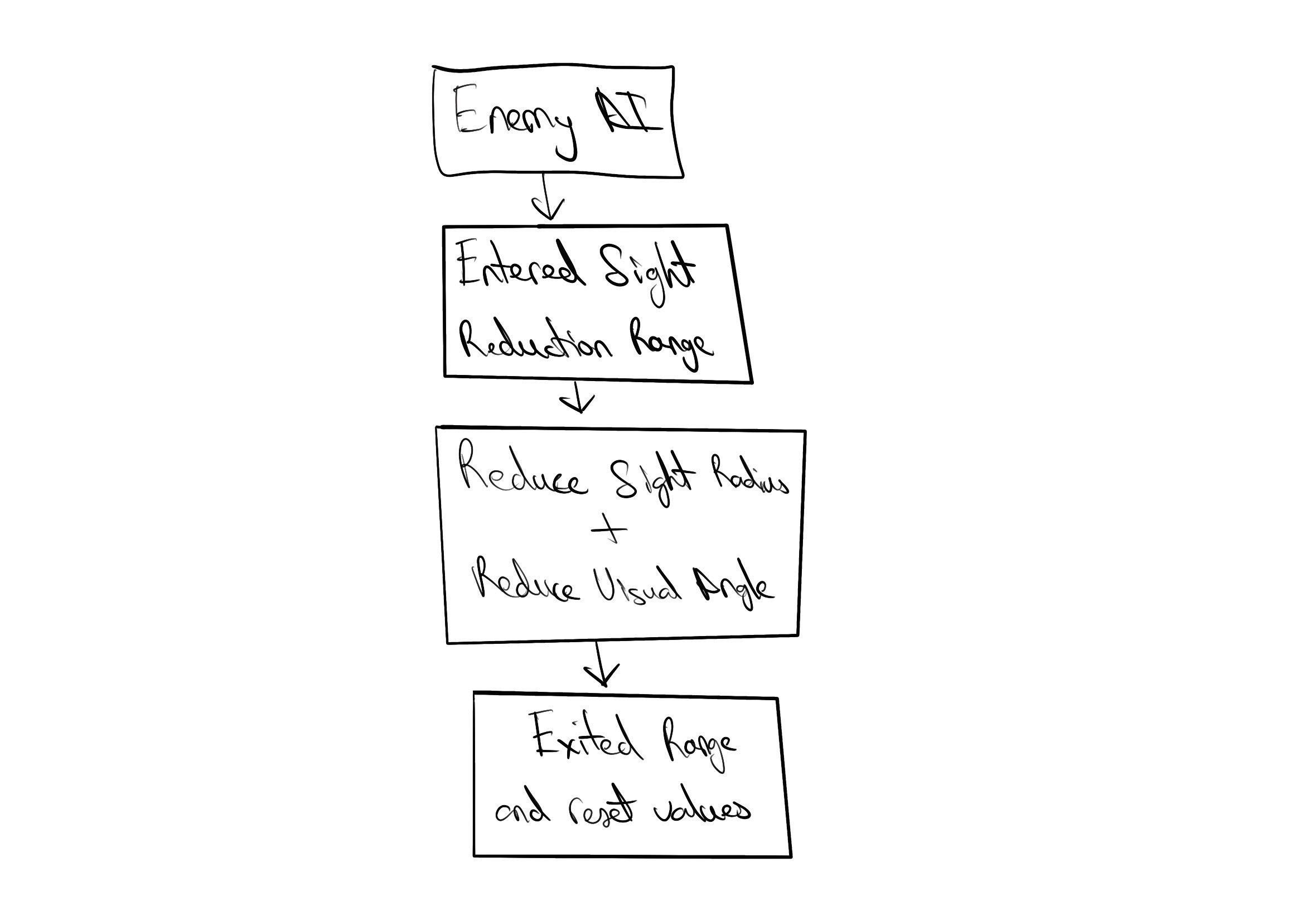
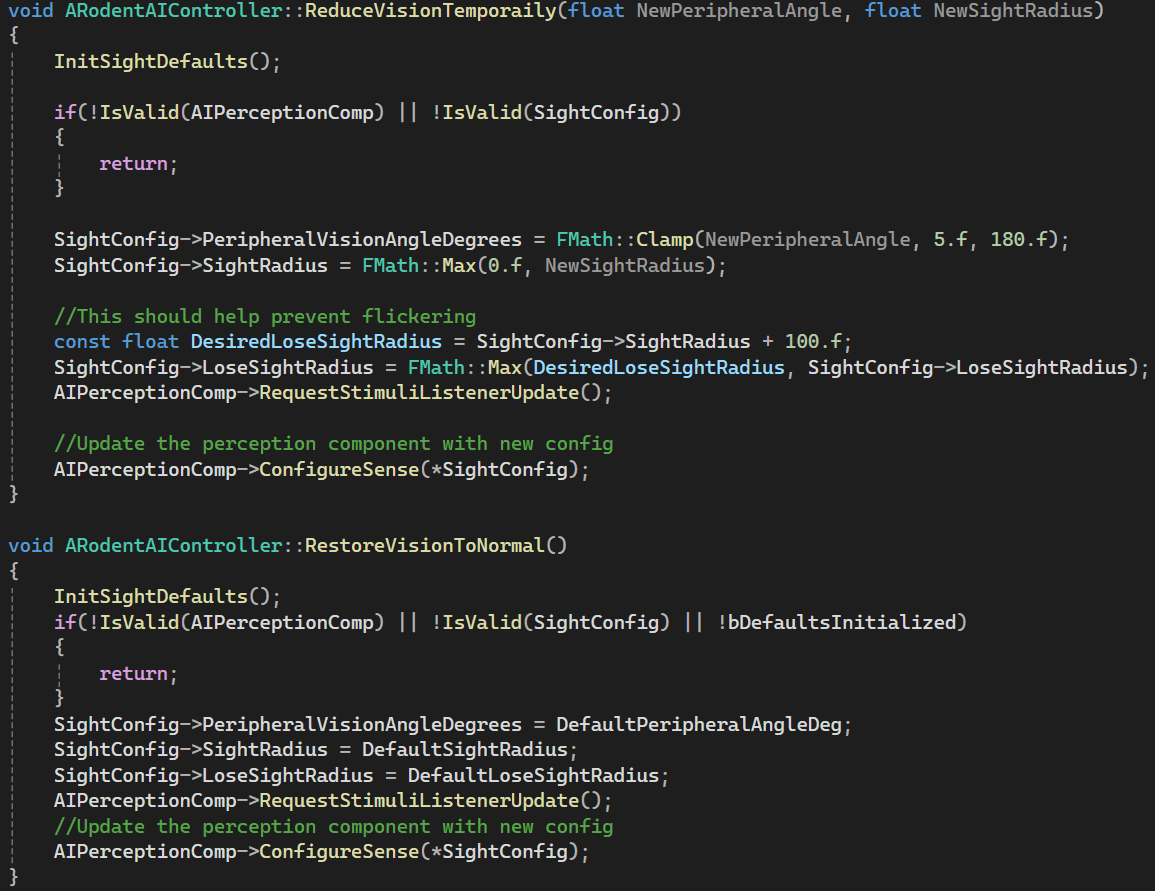
Low-Level AI Optimization: Developed custom C++ classes to manipulate AI Perception variables at runtime, overcoming Blueprint limitations to create highly responsive and optimized guard behaviors.
GAS Integration: Implemented Unreal’s Gameplay Ability System (GAS) to build a modular, data-driven framework. This allowed for rapid prototyping of rodent abilities and status effects, ensuring a scalable and stable stealth system.
Systems Engineering: Lead the programming of core mechanics and the gameplay loop, ensuring seamless interaction between player controls and complex environmental triggers.
Production Pipeline: Managed the project's version control (Git/Perforce) and directed the QA process, translating data from extensive playtesting into polished gameplay sprints.
Technical Challenges & Solutions
Challenge: Scalable AI Perception & Optimization For a "sandbox-style" stealth game, we needed a high volume of AI guards that behaved with robotic, predictable precision. However, Unreal’s standard Blueprint-based AI Perception components were too rigid for our needs, specifically when trying to dynamically shift detection variables (like peripheral vision angles and sight radius) at runtime based on game states.
Solution: I transitioned the core perception logic into C++. This allowed us to bypass the overhead of the Blueprint Virtual Machine and directly manipulate AI sensory variables that are inaccessible via Blueprints. By handling these calculations in code, I achieved significant optimization, ensuring the "robotic" guard behaviors remained consistent and performant even in scenes with high actor counts.
Challenge: Managing Rapid Mechanic Iteration With a "fail-fast" development philosophy, we were constantly testing new cybernetic rodent abilities, which risked creating a bloated and "spaghetti" character class.
Solution: I integrated Unreal’s Gameplay Ability System (GAS) to decouple ability logic from the base character. This modular, data-driven framework allowed the team to prototype, swap, and balance abilities in minutes without touching the core C++ architecture. This kept our repository clean and ensured that our rapid development cycles never compromised the stability of the final build.
Data-Driven Level Design: Player Heatmaps
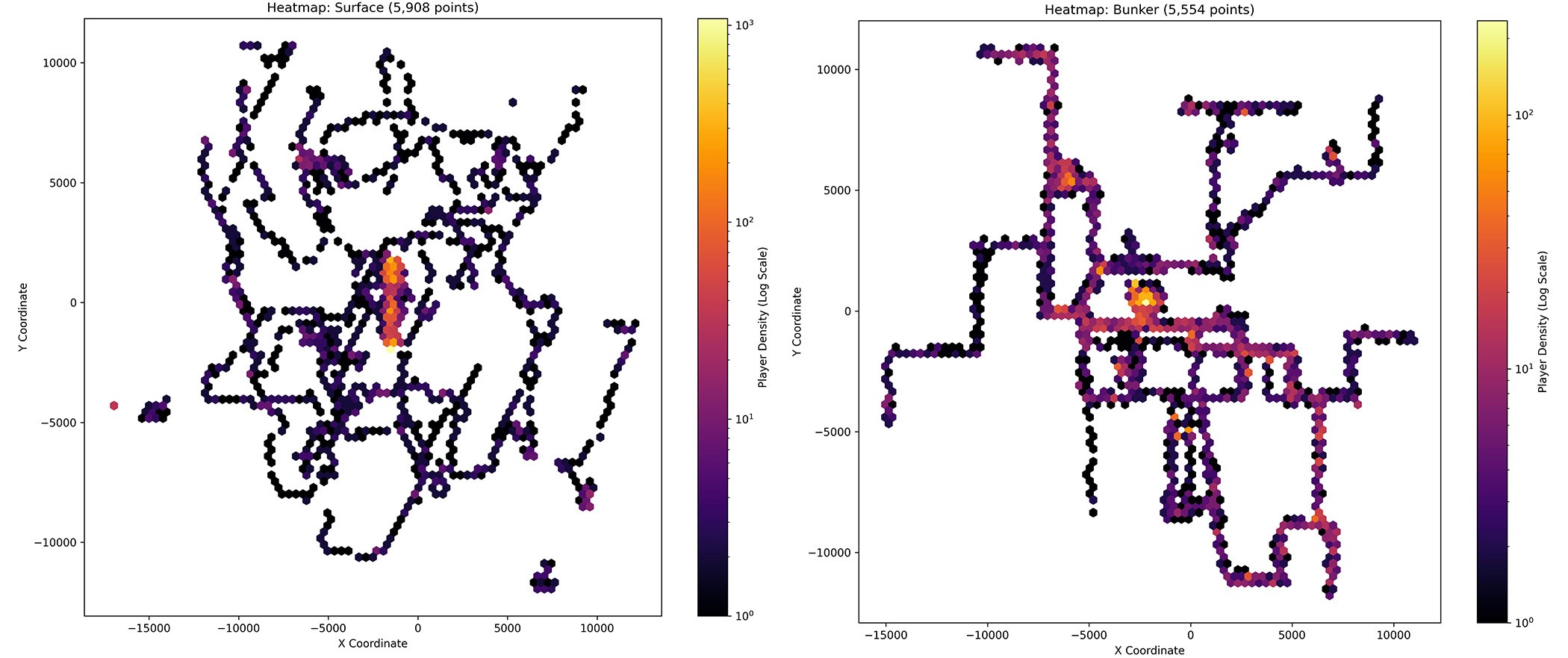
To maximize the value of our playtest sessions, I engineered a custom analytics pipeline to visualize player navigation and spatial engagement. This was instrumental in identifying "dead zones" and balancing enemy placement across complex, multi-layered environments.
The Pipeline
Telemetry Collection: Developed a custom C++ function in Unreal to capture $(X, Y, Z)$ coordinates at fixed intervals during gameplay.
Automated Export: Streamlined the logging process to output high-fidelity movement data into a structured .csv format upon level completion or player death.
Visualization & Analysis: Developed a Python script to parse the CSV and generate 2D heatmaps. By filtering data based on the Z-axis, I was able to isolate and analyze player behavior specifically for the "Above Ground" and "Bunker" sectors.
The Result
The heatmaps revealed that players were consistently bypassing entire sections of the map. Using this data, we strategically added new bunker entrances and introduced unique environmental interactions to drive player interest, resulting in a 40% increase in exploration across underutilized zones.
Final Reflection: From Concept to Capstone
Project Rod3nt is the culmination of my four-year journey in game development. It served as the ultimate proving ground for the technical and creative skills I’ve acquired, allowing me to take an active role in every stage of the production lifecycle.
A Holistic Development Role
While my primary focus was leading the engineering and technical strategy, I took pride in contributing to every facet of the game’s success:
End-to-End UI/UX: I designed and iterated on all final UI elements, ensuring the "cybernetic" aesthetic provided clear, tactile player feedback for our complex stealth systems.
Full-Stack Execution: From architecting low-level C++ systems to refining the front-end interface, I bridged the gap between backend logic and the player-facing experience.
Leadership & Synthesis: Leading this project taught me how to synthesize data, design, and code into a cohesive, shipping-ready title.